
Out-of-Home has matured into a measurable, data-driven channel that operates alongside digitalnot behind it. Impression-based trading is active across major markets. Programmatic activation is no longer experimental. Dynamic creative adapts to real-world signals, and attribution connects exposure to physical outcomes.
At the same time, marketers face structural pressure. Third-party cookies are disappearing. Platform data sits inside walled gardens. Contextual TV and digital audio promote themselves as privacy-safe alternatives. In this environment, OOH occupies a distinctive position.
It does not rely on personal identifiers. It does not depend on probabilistic household graphs. It uses aggregated, mobility-based intelligence to measure real-world movement and store visitation.
That distinction matters.

OOH may not be the only privacy-safe channel in existencebut at scale, in the physical world, it is one of the few channels capable of delivering measurable performance without personal data dependency.
This shift is powered by Catalyst, the proprietary audience intelligence and trading platform developed by Moving Walls. Catalyst does not replace a DSP; it integrates with programmatic buying infrastructure, feeds impression forecasts into demand platforms, and closes the attribution loop post-campaign. It functions as the intelligence layer across planning, activation, and measurement.
The Contrarian View: OOH’s Capability Has Outpaced Its Reputation
Despite these advancements, much of the industry still treats OOH as a brand channel. Screens are booked based on prominence rather than verified audience delivery. Creative wins awards but lacks attribution tracking. Campaigns are evaluated on reach estimates rather than incremental outcomes.
This is no longer a technology limitation. It is a legacy buying habit.
Catalystproprietary to Moving Wallswas built precisely to address this gap. It provides:
- Impression forecasting based on real mobility data
- Audience clustering without personal identifiers
- Route heatmapping for moving media
- Social signal clustering
- Closed-loop store visit attribution
The industry narrative says “OOH is digital.”
The more accurate statement is that OOH is measurable performance infrastructurebut many buyers have not adjusted their frameworks accordingly.
The tactical sections below translate that infrastructure into execution.
1️⃣ Engineer 3D & Anamorphic OOH for Measurable Lift

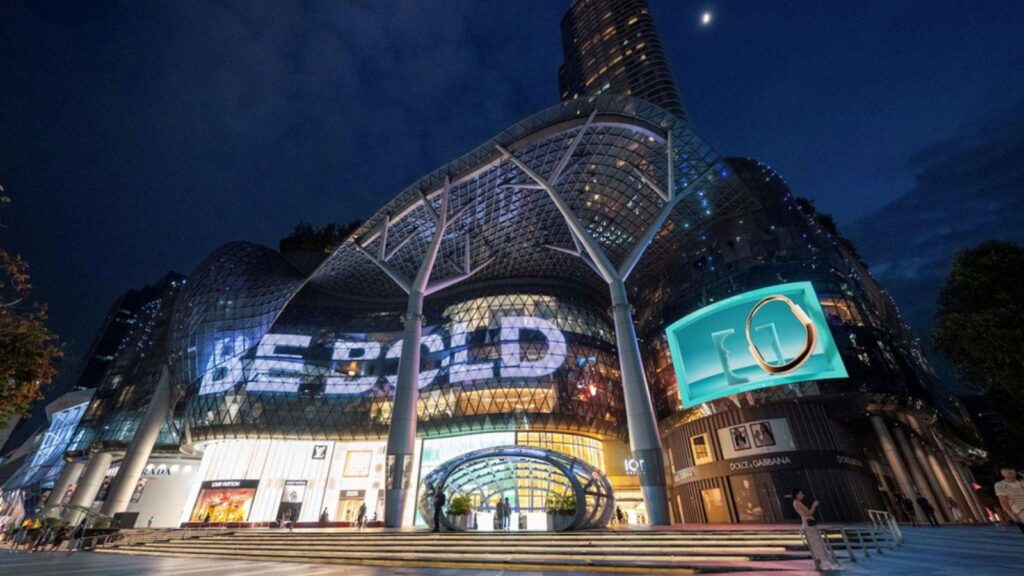

Anamorphic OOH has moved beyond spectacle. What determines success is not the illusionbut the measurement framework behind it.
2023 Regional Campaign Analysis (Moving Walls)
Across 47 campaigns measured over a 12-month period in Southeast Asia:
- 3D executions recorded 28–34% higher average dwell time
- Delivered 22% uplift in social amplification
- Generated 18% higher store visitation rates when paired with mobile retargeting
The 22% uplift was directly linked to Catalyst’s social signal clustering engine, which maps geofenced exposure zones against real-time hashtag velocity and device movement patterns. In other words, amplification was not inferredit was modelled against audience overlap.
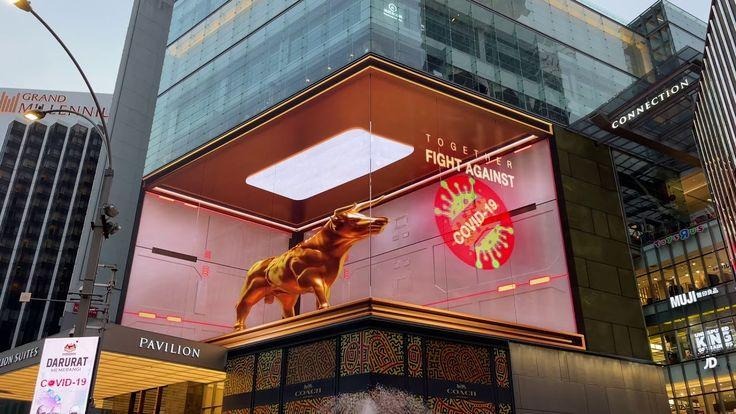
Chinese New Year Bull Activation Measurement Role
The Pavilion Kuala Lumpur Chinese New Year bull campaign was executed by the media owner, while Moving Walls deployed Catalyst for independent measurement and attribution analytics.
Catalyst tracked:
- 31% week-on-week footfall uplift
- 26% increase in branded search queries
- 17% incremental store visitation versus matched control zones
3D performance measurement extends beyond social views. It includes:
- Dwell-time heatmaps
- Pre- and post-exposure search trend correlation
- Control-versus-exposed geo-lift analysis
- Incremental visitation modelling
Closed-loop attribution was validated by comparing anonymised, aggregated device movement from exposed zones against statistically matched non-exposed zones.
What Marketers Should Do
Treat 3D as a high-impact launch asset, but demand measurable outcomes.
- Validate screen selection using impression forecasts
- Define incremental visitation targets (e.g., +15–20% uplift vs. control zones)
- Pair exposure with mobile retargeting
- Monitor dwell time and search lift within 72 hours of activation
2️⃣ Deploy Non-Traditional OOH as Precision Media


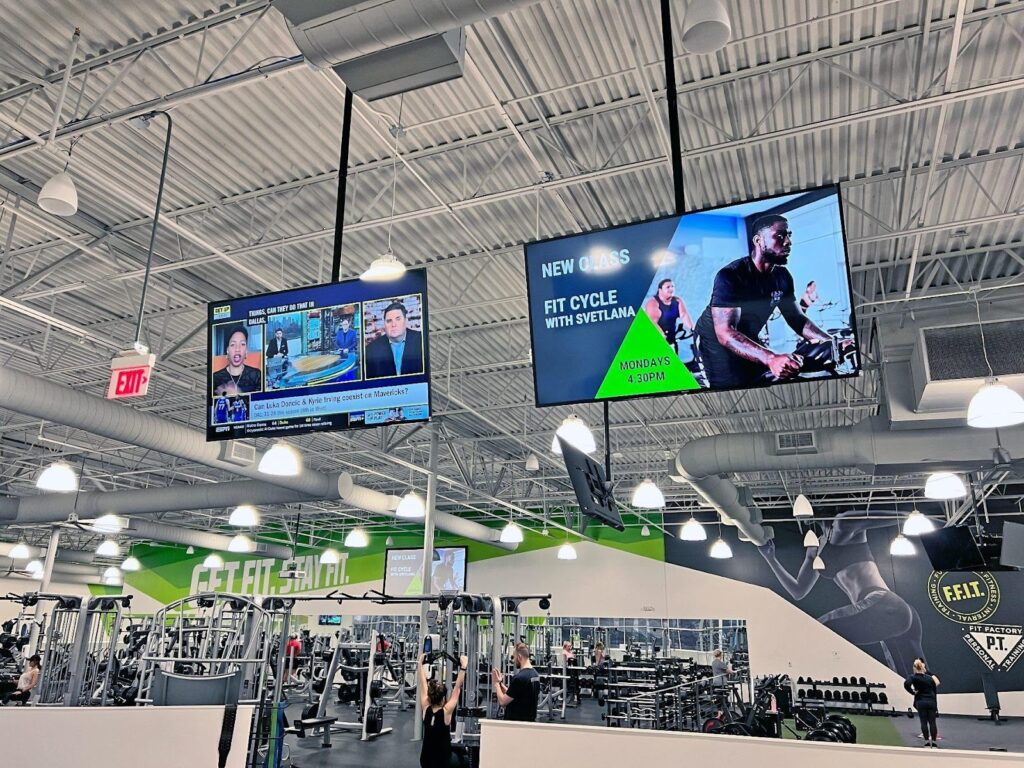

Place-based mediafood courts, elevators, gyms, retail kiosksnow represents one of the fastest-growing digital OOH segments.
Moving Walls’ 2024 inventory analysis across seven Asian markets recorded:
- 41% year-on-year growth in place-based screens
- 2.3x higher dwell time compared to roadside billboards
- 27% higher ad recall in post-campaign surveys
The underlying driver is privacy-resilient targeting. Unlike cookie-based digital channels, these environments rely on aggregated mobility modelling. Catalyst clusters anonymous device signals to create behavioural audience segments without storing personal identifiers.
For marketers concerned about cookie deprecation, this means identity is inferred from movement patterns, not personal browsing history.
What Marketers Should Do
Use micro-environments for lower-funnel objectives.
- Optimise creative by daypart (e.g., retail promotions during peak dwell hours)
- Track dwell-time-adjusted CPM
- Conduct geo-lift studies to measure incremental visits
- Compare cost-per-visit against paid social benchmarks
3️⃣ Activate Dynamic DOOH with Clear Performance Benchmarks


Static creative underperforms when contextual signals are available.
Moving Walls campaign audits, covering 63 dynamic DOOH activations across Retail and FMCG categories in 2023–2024, showed:
- 19% higher engagement rates
- 21% improvement in conversion intent in FMCG weather-trigger campaigns
- 14–18% media efficiency gains through hourly optimisation
For example, an FMCG beverage brand triggered creative when temperatures exceeded 30°C. Catalyst tracked real-time exposure zones and measured a double-digit uplift in nearby convenience store visits during peak heat hours.
Dynamic optimisation works because impression-level reporting identifies underperforming variants in-flight.
What Marketers Should Do
Develop at least 4–6 creative variants, with a target of achieving 10–15% performance variance between top and bottom variants to justify optimisation.
- Align triggers to revenue drivers (weather, traffic, store proximity)
- Monitor hourly performance dashboards
- Suppress underperforming creatives mid-flight
- Track cost-per-visit by variant
4️⃣ Turn Moving OOH into Efficient Conversion Media

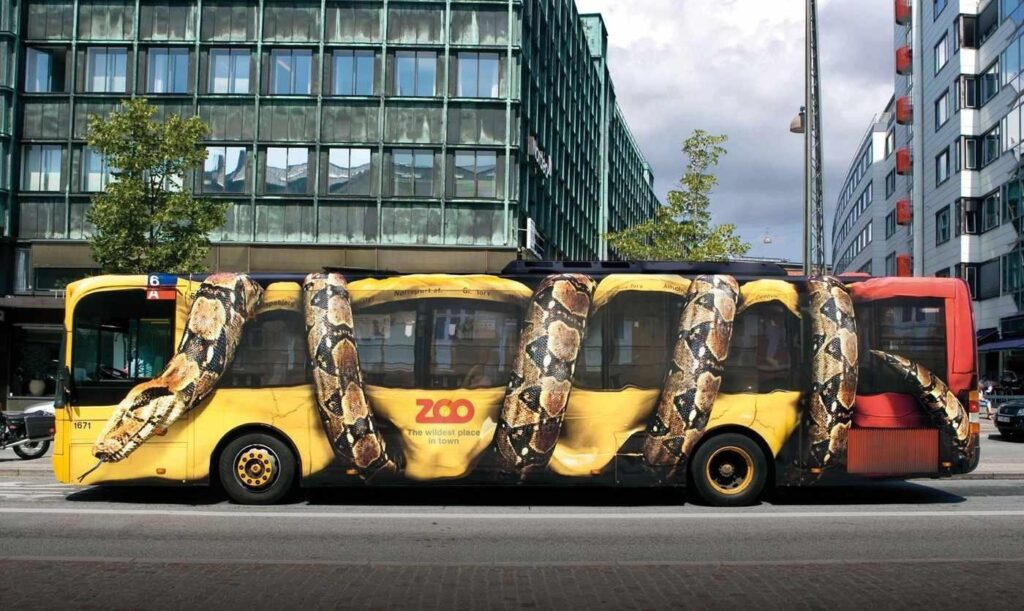
Moving OOH often suffers from wasted spend in low-traffic corridors. Route heatmapping directly addresses this buyer pain point.
Through Catalyst, Moving Walls overlays historical mobility density onto planned routes, identifying high-yield corridors and flagging underperforming zones before activation.
In 2024 deployments:
- Route optimisation reduced wasted impressions by 17%
- Geo-triggered messaging increased nearby store visits by 24%
What Marketers Should Do
Measure mobility media differently from static inventory.
Track:
- CPM
- Cost Per Route Mile (CPRM)
- Exposure Density per Route
- Incremental Store Visits
- Effective Cost Per Visit
Optimise routes based on heatmapsnot driver convenience.
5️⃣ Execute Impression-Based Trading with Discipline
OOH now trades on impression-level delivery. Catalyst forecasts spot-level impressions and validates delivery post-campaign.
Moving Walls benchmarking indicates campaigns optimised on impression data improved media efficiency by 23% versus static panel buys.
Impression-Based Trading Checklist
- Validate forecasted impressions pre-campaign
- Align OOH KPIs with digital benchmarks (CPM, reach, frequency)
- Monitor mid-flight delivery against forecast
- Conduct post-campaign geo-lift attribution
- Benchmark cost-per-visit across channels
6️⃣ Operationalise Programmatic with Real Inventory Access
Programmatic DOOH is active across Moving Walls’ marketplace, which aggregates inventory from multiple media owners across Asia and the Middle East.
Catalyst feeds impression forecasts into programmatic pipes and consolidates reporting across fragmented supply. It complements DSP workflows rather than replacing them, acting as the intelligence and measurement layer.
The advantage lies not in automation alonebut in verified audience delivery tied to specific screen networks accessible through the Moving Walls exchange.
What Marketers Should Do
- Start with impression forecasting
- Activate high-density zones first
- Scale based on cost-per-visit performance
- Integrate mobile retargeting
- Review post-campaign attribution within 14 days
Privacy-First, Defined Clearly
“Privacy-safe” in OOH does not mean contextual adjacency. It means:
- Aggregated mobility modelling
- Anonymous device clustering
- No personal identifier storage
- Geo-level attribution using exposed vs. control analysis
This aggregation model differentiates Catalyst from platforms that rely on household graphs or login data.
Final Perspective
OOH no longer needs to argue that it is digital. Its competitive edge lies elsewhere.
It scales without personal identifiers.
It measures real-world outcomes.
It integrates into programmatic workflows.
It closes the attribution loop.Catalyst does not just measure OOH.
It transforms OOH.